Start Restoration

Professional Photo Restoration

Sharpen the Moments That Got Away

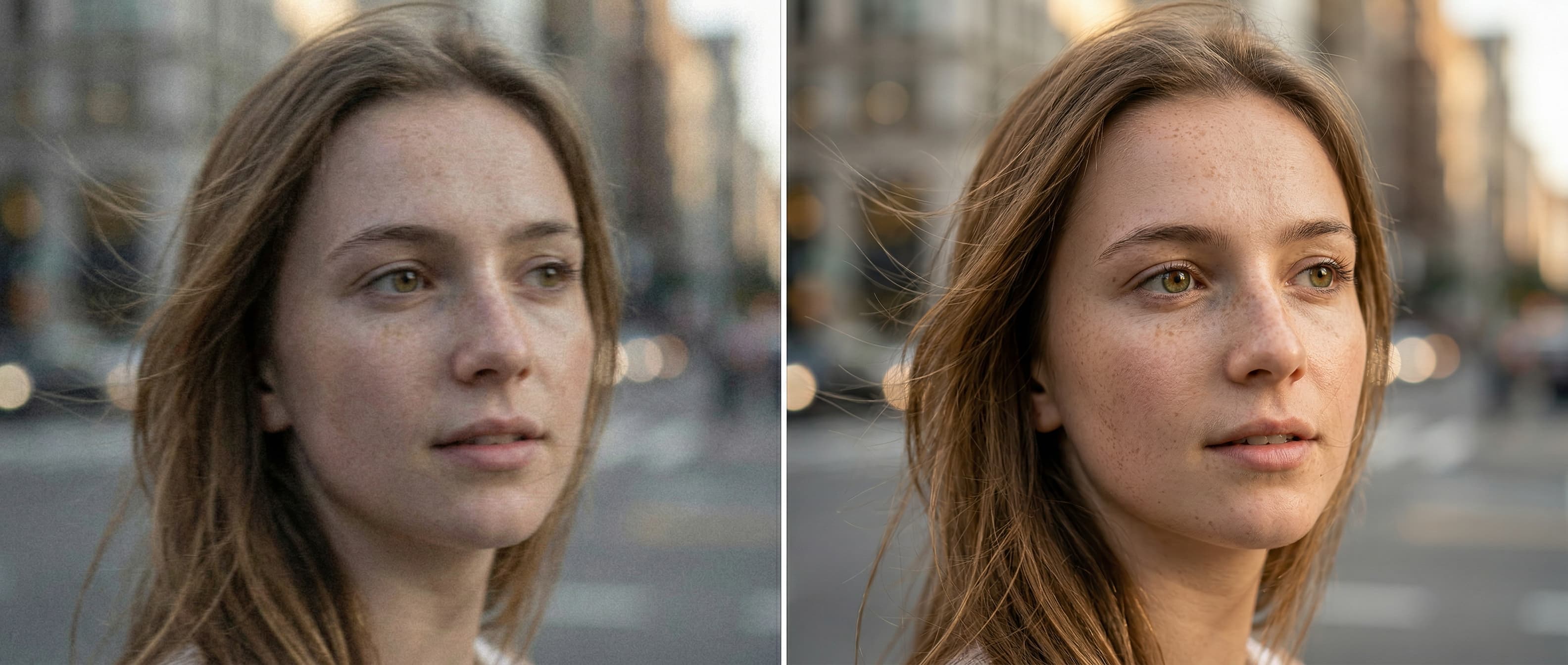
Blurry photographs are one of the most frustrating forms of image damage because the moment was captured, but not quite clearly enough. Whether the camera moved, the subject shifted, or the focus simply missed, the memory is trapped behind a veil of softness. Our sharpening and clarity restoration process cuts through that blur to recover the detail that was almost there.

Blurry photo enhanced and sharpened, before and after

Before & After: Sharpen the Moments That Got Away

Understanding Why Photos Become Blurry

Blur in photographs comes from several distinct causes, each requiring a different restoration approach. Camera shake occurs when the photographer's hands move during exposure, creating a characteristic directional smear across the entire image. Subject motion blur happens when the person being photographed moves faster than the shutter speed can freeze, resulting in a sharp background with a ghosted or streaked subject. Missed focus produces a soft, dreamy quality where detail exists but is spread across too wide an area to appear sharp. Many older photographs exhibit a combination of these issues, compounded by the limitations of consumer camera lenses and film grain. Understanding the specific type of blur is the first step in an effective restoration.

Our Approach to Blur Correction

We use a multi-stage process to address blur. First, we analyze the blur pattern to determine its type and severity. Directional motion blur leaves predictable traces that can be mathematically reversed to recover underlying sharpness. Out-of-focus softness requires a different technique that reconstructs edge detail and micro-contrast without introducing artificial harshness. For moderate blur, we can achieve dramatic improvements in facial clarity, text legibility, and environmental detail. For severe blur, we set realistic expectations: while we can significantly improve readability and emotional impact, we cannot manufacture detail that was never recorded by the camera. Honesty about achievable results is central to our process.

Ready to Restore Your Photo?

Upload your image and receive a free preview of the restoration before you pay. No commitment required.

Start Free Preview

Enhancing Detail Without Creating Artifacts

One of the biggest risks in blur correction is over-sharpening, which creates unnatural halos around edges, amplifies noise and grain into a crunchy texture, and makes skin look plasticky or pore-like. Consumer sharpening tools are notorious for these artifacts because they apply a single aggressive filter uniformly across the image. Our approach is selective and layered. We sharpen facial features differently than fabric textures. We enhance fine detail like eyes and hair without amplifying film grain in smooth areas like sky and skin. The result is an image that looks naturally clear rather than digitally processed.

When Blur Correction Pairs with Other Restoration

Many blurry photographs also suffer from other forms of damage: fading, scratches, water spots, or color shifting. In these cases, blur correction is one stage of a comprehensive restoration. We typically address physical damage first, then correct color and exposure, and apply sharpening as a final refinement. This sequence ensures that sharpening enhances real image detail rather than amplifying damage artifacts. If your photo needs multiple types of repair, our standard restoration packages cover the full range of corrections.

Getting the Best Results from Blurry Originals

The quality of blur correction depends heavily on the starting material. A high-resolution scan of the original print preserves more recoverable detail than a low-resolution phone snapshot. We recommend scanning blurry prints at 600 DPI or higher, keeping the scanner glass clean, and avoiding any auto-sharpening your scanner software might apply. If you are photographing a print rather than scanning it, use even lighting, hold the camera parallel to the print surface, and shoot at the highest resolution your device supports. These steps give our restoration artists the best possible starting point for recovering clarity from your blurry photographs.

See the Difference

Before & After Restoration

Every photograph tells a story. Damage obscures that story but does not erase it. Our restoration process reveals what was always there, waiting to be seen again.

Before

Damaged original

After

Fully restored

Common Questions

Frequently Asked Questions

Can you make a completely blurry photo perfectly sharp?

We can significantly improve most blurry photos, but honesty matters: if a photo is extremely out of focus, we cannot create detail that was never captured by the camera. For moderate blur, results are often dramatic. We will assess your specific photo and let you know what level of improvement is realistic.

What types of blur can you fix?

We address camera shake blur, subject motion blur, and out-of-focus softness. Each type requires a different correction technique. Camera shake blur often yields the most dramatic improvement because the detail was captured but smeared in a predictable pattern that can be partially reversed.

Will sharpening make my photo look grainy or artificial?

No. We use selective sharpening techniques that enhance detail in important areas like faces and text while avoiding the crunchy, over-processed look that consumer sharpening filters often produce. The goal is natural-looking clarity, not a digital artifact.

Can you fix blur on a scanned film negative?

Yes. We can work with scanned negatives as well as prints. Scanned negatives often contain more recoverable detail than prints because they have not gone through the printing process, which can introduce additional softness.

Every Photo Has a Story Worth Saving

Upload your damaged photograph today and receive a free restoration preview. No payment until you approve the result.

Start Your Restoration