Start Restoration

Professional Photo Restoration

Rescue the Memories That Survived the Water

Water damage is among the most devastating things that can happen to a photograph collection. Whether from a burst pipe, a flooded basement, a hurricane, or decades of humid storage, water attacks every layer of a photographic print simultaneously. But survival is not the same as loss. If your water-damaged photographs are still recognizable, our restoration process can often recover them to a condition that will astonish you.

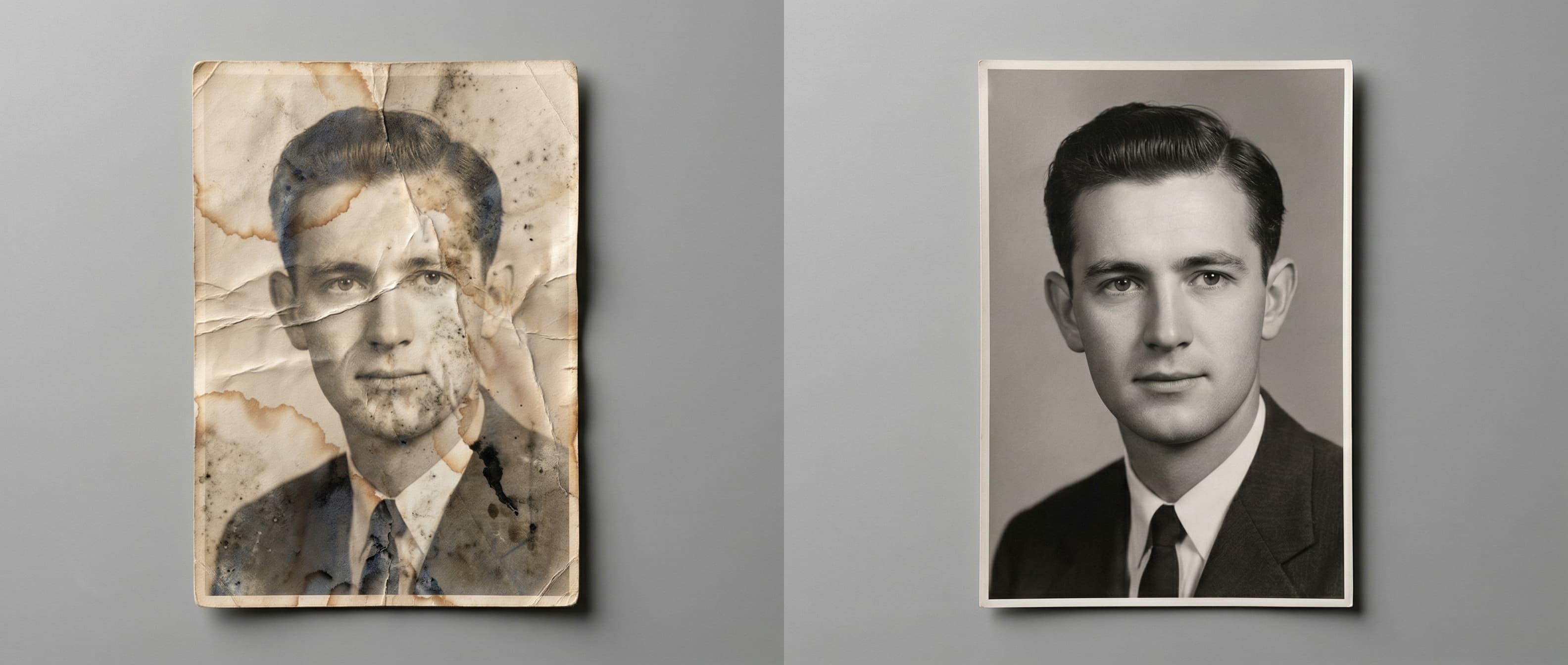
Water damaged photo professionally restored, before and after

Before & After: Rescue the Memories That Survived the Water

How Water Destroys Photographs

Water damage to photographs is multifaceted and progressive. On initial contact, moisture penetrates the paper base and swells the gelatin emulsion layer that holds the image. If the print remains wet, the emulsion softens and becomes vulnerable to abrasion, smearing, and adhesion to other surfaces. As the photo dries, the emulsion contracts unevenly, creating warping, cracking, and rippling. Minerals and contaminants dissolved in the water leave behind tide marks and staining as the water evaporates. If the photo remains damp in a warm environment, mold and mildew colonize the gelatin as a food source, leaving dark spots and eventually consuming the emulsion entirely. Photographs that were submerged in floodwater often arrive with all of these issues simultaneously, creating a complex restoration challenge that requires attention to every layer of damage.

Removing Water Stains and Tide Marks

The visible rings and cloudy patches left by water are among the most recognizable forms of photo damage. These marks are caused by dissolved minerals, dirt, and organic material deposited as water evaporates from the print surface. In many cases, the underlying image detail is fully intact beneath the stain, simply obscured by the mineral deposit. Our digital restoration process isolates the stain pattern and removes it without disturbing the image beneath, like lifting a dirty window to reveal the view it was hiding. For stains that have chemically altered the dyes or silver in the print, we rebuild color and density to match the surrounding undamaged areas.

Ready to Restore Your Photo?

Upload your image and receive a free preview of the restoration before you pay. No commitment required.

Start Free Preview

Repairing Emulsion Damage and Lifting

When the gelatin emulsion layer of a photograph lifts, bubbles, cracks, or peels away from the paper base, the result is patches of missing or distorted image. This is common in photos that were soaked and then dried too quickly or under heat. The affected areas may show the white paper base beneath, the image may be shifted or stretched where the emulsion wrinkled, or fragments of emulsion may have transferred to another surface the photo was pressed against. We reconstruct emulsion-damaged areas by extending detail from intact surrounding regions, matching color, texture, and subject matter to produce a seamless repair. For areas where the emulsion has transferred to another print or surface, we can sometimes work from both the print and the transferred ghost image to recover maximum detail.

Treating Mold and Mildew Damage

Mold on photographs presents both a restoration challenge and a preservation concern. Active mold should be addressed physically before digital restoration begins, as it can continue to damage the print. Once the physical mold is stabilized, the digital restoration addresses the visual damage: dark spots, foxing, discoloration, and areas where the mold has consumed the emulsion. We remove mold stains digitally and rebuild affected areas. In cases where mold has completely destroyed portions of the image, we reconstruct using surrounding detail and contextual information. If you have photos with active mold, we recommend consulting a conservator for physical stabilization before scanning for digital restoration.

Emergency Guidance for Recently Flooded Photos

If your photographs have been recently damaged by flooding or water exposure, time is critical. Keep wet photos in clean, cold water until you can deal with them to prevent further emulsion damage and mold growth. Carefully separate any photos that have stuck together while wet, as letting them dry bonded together will cause permanent transfer damage. Lay separated photos face-up on clean absorbent paper in a cool, dry area with good air circulation. Do not use heat to accelerate drying. Once dry, scan each photo at the highest resolution your equipment allows. These scans become the starting point for our digital restoration, and the quality of the scan directly affects the quality of the final result.

See the Difference

Before & After Restoration

Every photograph tells a story. Damage obscures that story but does not erase it. Our restoration process reveals what was always there, waiting to be seen again.

Before

Damaged original

After

Fully restored

Common Questions

Frequently Asked Questions

Can you restore photos that were submerged in a flood?

Yes, provided the photos are still recognizable and can be scanned. Flood-damaged photos often have multiple types of damage including staining, emulsion lifting, mold, and warping. We address each issue systematically. The sooner you can separate, dry, and scan the photos after a flood, the more detail we can recover.

My photos are stuck together from water damage. What should I do?

If the photos are still damp, soak them in clean, room-temperature water and gently separate them. If they have dried stuck together, do not force them apart, as this will rip the emulsion. Soak them in lukewarm water for 15 to 30 minutes and they should release. If they will not separate, scan them as-is and we will work with what is available.

Can you remove the wavy ripple pattern from a water-damaged photo?

The physical warping of a water-damaged print affects the scan quality by creating uneven focus and lighting. We recommend placing a clean sheet of glass over the print while scanning to flatten it temporarily. Digitally, we correct any remaining distortion and focus variations caused by warping.

Is there mold on my photos? How can I tell?

Mold on photographs appears as fuzzy or powdery spots in white, grey, green, or black. It often has a musty odor. Foxing, which appears as small reddish-brown spots, is a related fungal issue common in older prints. Both can be addressed in our digital restoration process, though active mold should be stabilized first to prevent further spread.

Every Photo Has a Story Worth Saving

Upload your damaged photograph today and receive a free restoration preview. No payment until you approve the result.

Start Your Restoration