The Short Answer: Yes, Almost Always
If you have ever held a faded, cracked, or water-stained photograph and wondered whether it could ever look the way it once did, the answer is almost certainly yes. Modern photo restoration has advanced to the point where even severely damaged images can be brought back to a remarkable level of quality.
That said, restoration is not magic. There are factors that determine how much can be recovered, and understanding those factors will help you set realistic expectations before you begin. In this article, we will walk through the most common types of photo damage, explain what today's restoration techniques can accomplish, and be honest about the rare cases where limitations apply.
Types of Damage and What Can Be Done
Fading and Color Loss
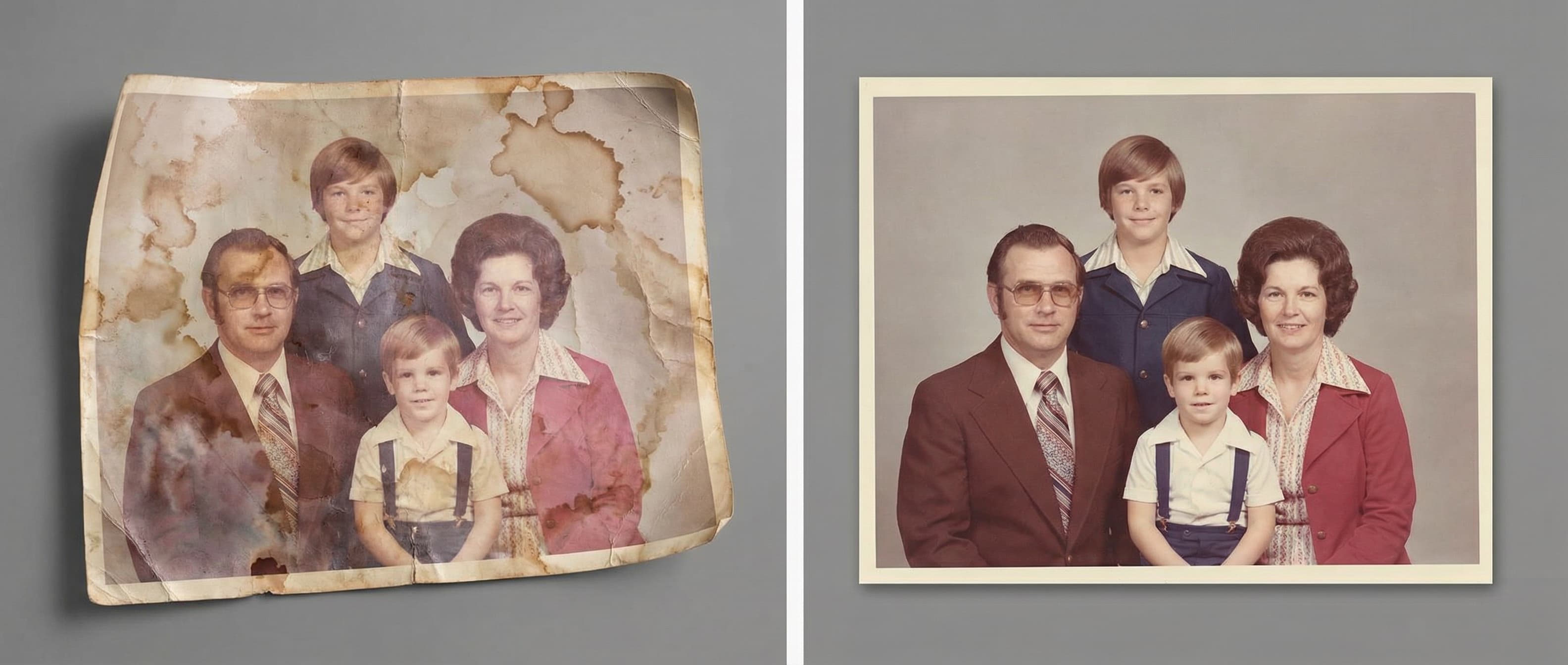
Fading is the single most common form of photo deterioration. Over years and decades, exposure to light, heat, and air causes pigments and dyes to break down. Color photographs lose saturation and shift toward unwanted hues — usually magenta, yellow, or cyan. Black-and-white prints lose contrast and develop a flat, washed-out appearance.
Can it be restored? Absolutely. Correcting fading and color shifts is one of the most reliable restoration tasks. A skilled specialist can rebuild the original tonal range, restore accurate color balance, and bring back depth and richness that may have been missing for years. This is true even for heavily faded images, because the underlying image information is usually still present — it is just weakened.
Cracks, Creases, and Fold Lines
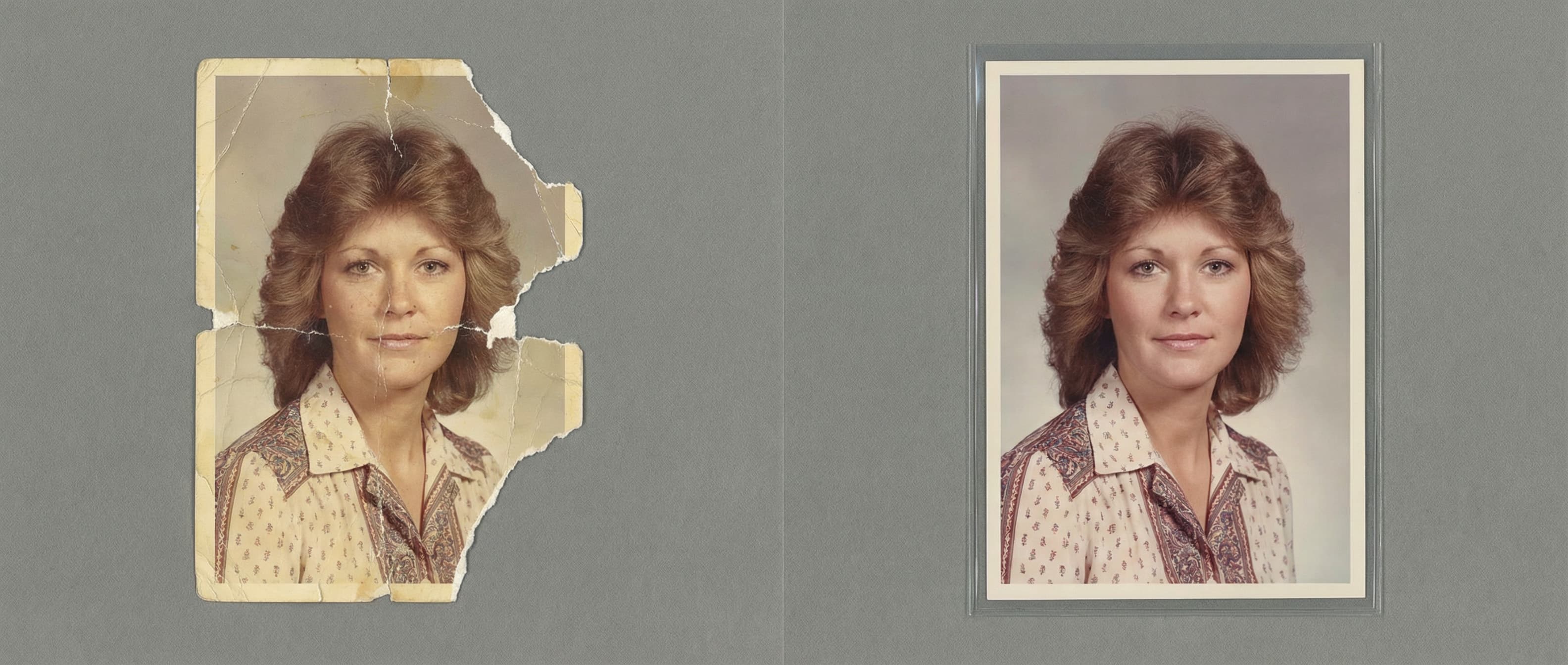
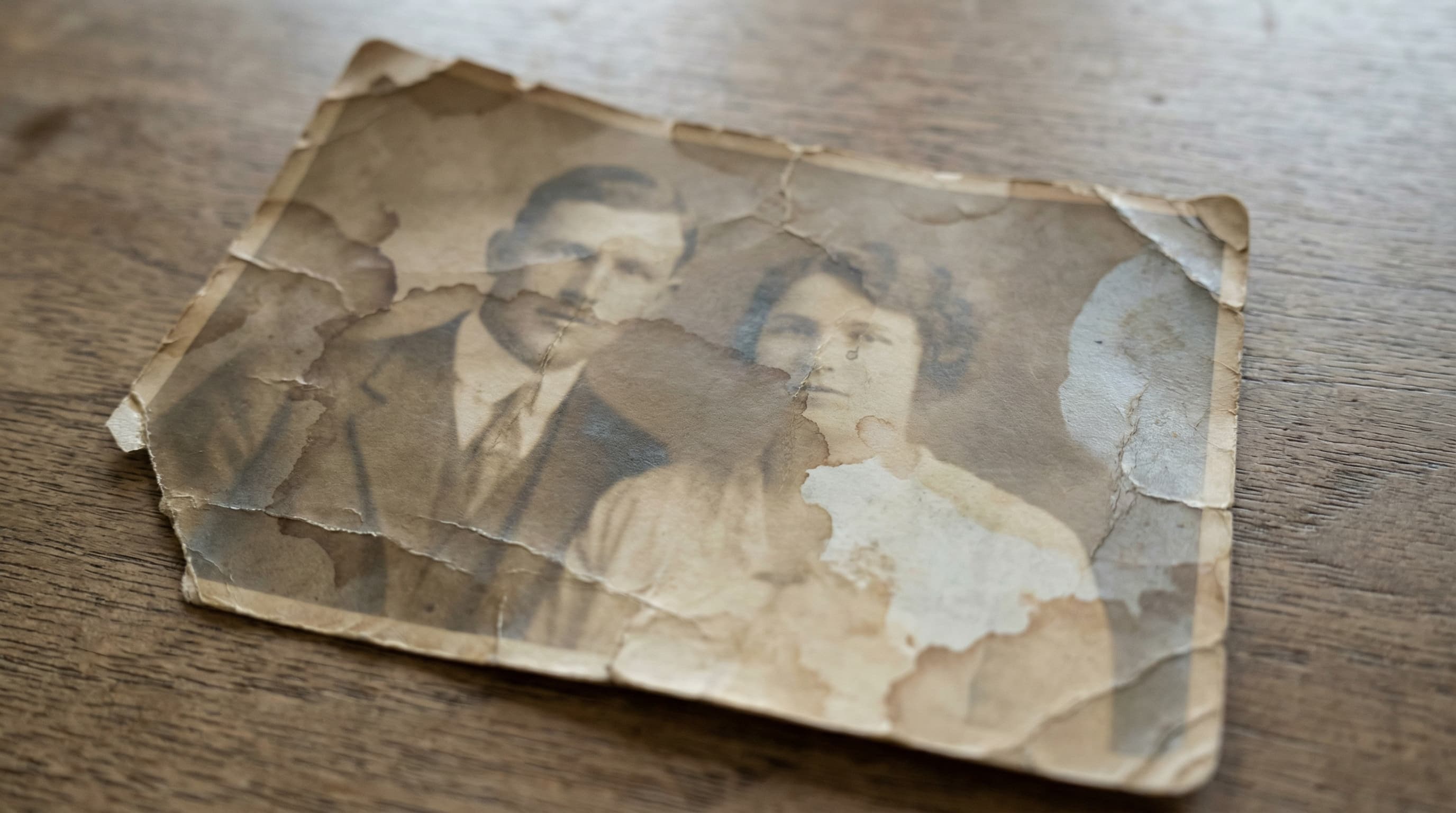
Physical handling leaves its mark. Photos that have been folded, bent, or stored loosely in drawers develop cracks and crease lines that cut across faces, backgrounds, and important details.
Can it be restored? Yes, and this is one of the areas where professional restoration truly shines. An experienced artist can trace the path of each crack and carefully rebuild the image underneath, blending the repair seamlessly with the surrounding area. Even deep creases that have caused the emulsion to flake away can be addressed, though the artist is essentially recreating the missing detail using contextual clues from the rest of the image.
Tears and Missing Sections
Torn photographs present a more complex challenge, especially when a portion of the image is completely missing. A photo that has been ripped in half, or one with a corner torn away, requires reconstruction rather than simple repair.
Can it be restored? In most cases, yes — with very good results. If the tear is clean and both pieces exist, the restoration artist can align and rejoin them with virtually invisible seams. When portions are missing, the artist reconstructs the absent area using visual context: the pattern of a shirt collar, the contour of a jawline, the texture of a background wall. The larger the missing area and the more critical its content (a face, for example), the more skill and time the work requires. Our damaged picture repair guide covers this topic in detail.
Water Damage and Staining
Water is one of a photograph's worst enemies. Moisture can cause prints to warp, stick together, develop mold, or acquire irregular stain patterns that obscure the image beneath.
Can it be restored? Usually, yes. Water stains and discoloration can be corrected digitally after the photo is scanned. The key factor is whether the image detail is still present beneath the stain. If the water caused the emulsion to dissolve or the paper to disintegrate, those areas will need reconstruction similar to what is done for tears and missing sections. Mold damage can be tricky — if it has eaten into the emulsion, detail may be permanently gone in those spots, but a skilled artist can reconstruct realistic replacements.
Scratches and Surface Marks
Surface scratches are extremely common, especially on photos that were stored without protective sleeves. They appear as fine white or light-colored lines across the image.
Can it be restored? Easily. Surface scratches are among the simplest issues to correct. Professional restoration removes them cleanly without affecting the underlying image detail. Even dense networks of scratches can be addressed systematically.
Yellowing and Discoloration
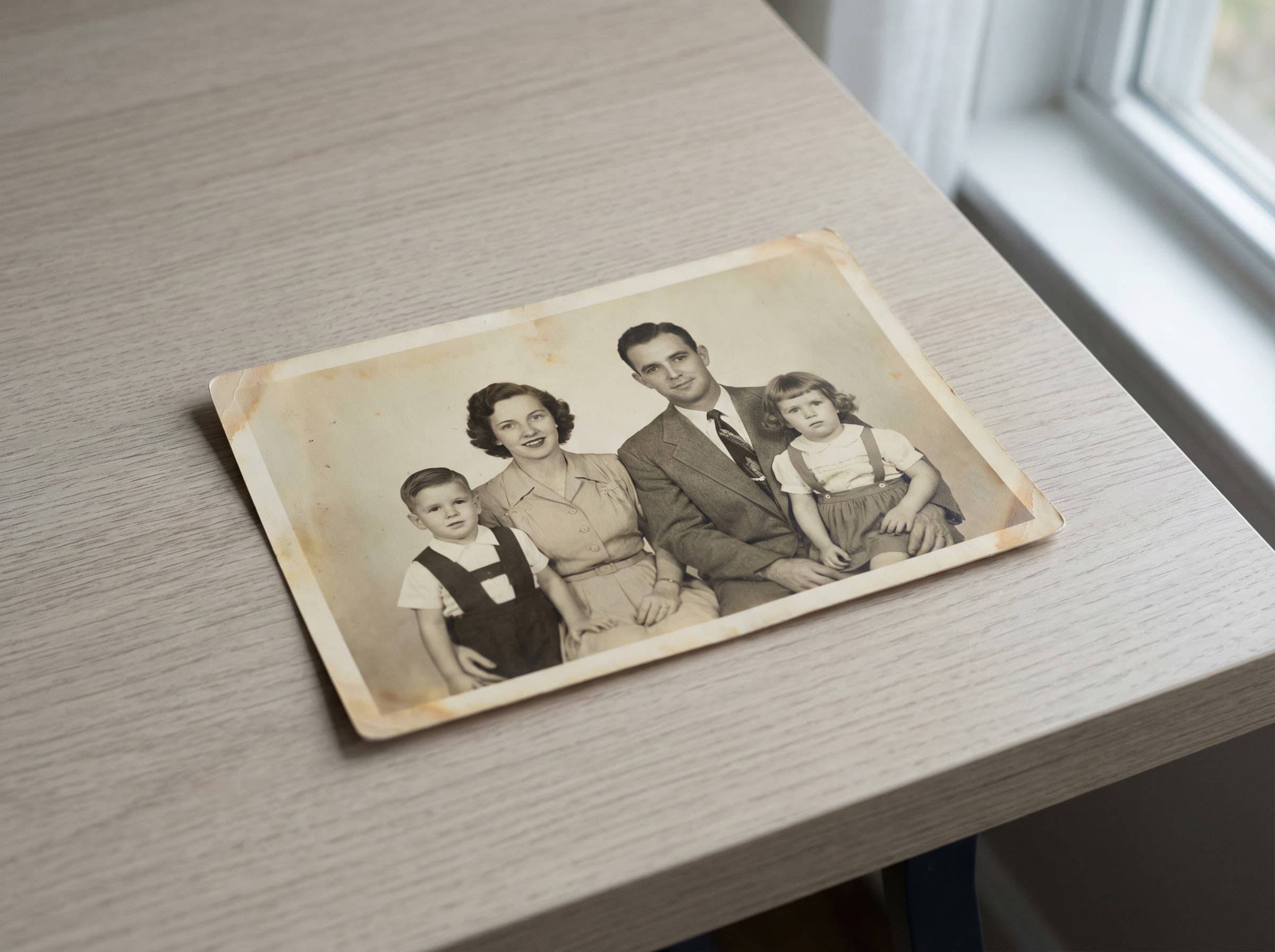
Many photos develop an overall yellow or brownish cast as they age, caused by chemical changes in the paper and processing chemistry.
Can it be restored? Yes. Global discoloration responds very well to color correction. A restoration specialist can neutralize the unwanted cast while preserving the warmth and character of the original image. If you prefer a clean, neutral tone, that is achievable. If you love the vintage warmth and just want the image sharpened and clarified, that is achievable too.
Extremely Old or Fragile Photographs
Daguerreotypes, tintypes, cabinet cards, and other 19th-century photographic formats present unique challenges. The physical medium is often fragile, and the images themselves may be very low in contrast or partially oxidized.
Can it be restored? Yes, though the restoration is performed entirely on a digital scan — the original artifact should be handled by a conservator, not a retoucher. Once scanned at high resolution, these images can be dramatically improved. Contrast can be rebuilt, staining removed, and even colorization applied if desired. The results can be stunning, revealing detail and depth that may not have been visible to the naked eye for over a century.
What Are the Limits of Photo Restoration?
While modern techniques are remarkably capable, there are honest limitations worth understanding:
When detail is completely destroyed
If a section of a photograph has been entirely burned, dissolved by chemicals, or eaten away by severe mold, there is no hidden detail to recover. The restoration artist must reconstruct that area from scratch, using context and educated judgment. For backgrounds and clothing, this produces excellent results. For faces, the artist can produce a plausible reconstruction, but it is an interpretation rather than a recovery of the original.
Extremely low-resolution source files
Restoration works best when the source scan or photograph contains enough pixel data to work with. A tiny, thumbnail-sized digital image or a badly compressed JPEG may not contain enough information for a high-quality restoration. This is why scanning at 600 DPI or higher is so important.
Unrealistic expectations
Restoration recovers what was originally captured. It cannot transform a blurry snapshot into a sharp studio portrait. If the original photo was out of focus, poorly lit, or shot at a great distance, the restored version will be improved but subject to the same fundamental limitations of the original exposure.
How Modern Restoration Works
Today's professional photo restoration combines advanced digital tools with the trained eye and hand of an experienced artist. Here is a simplified overview of the typical workflow:
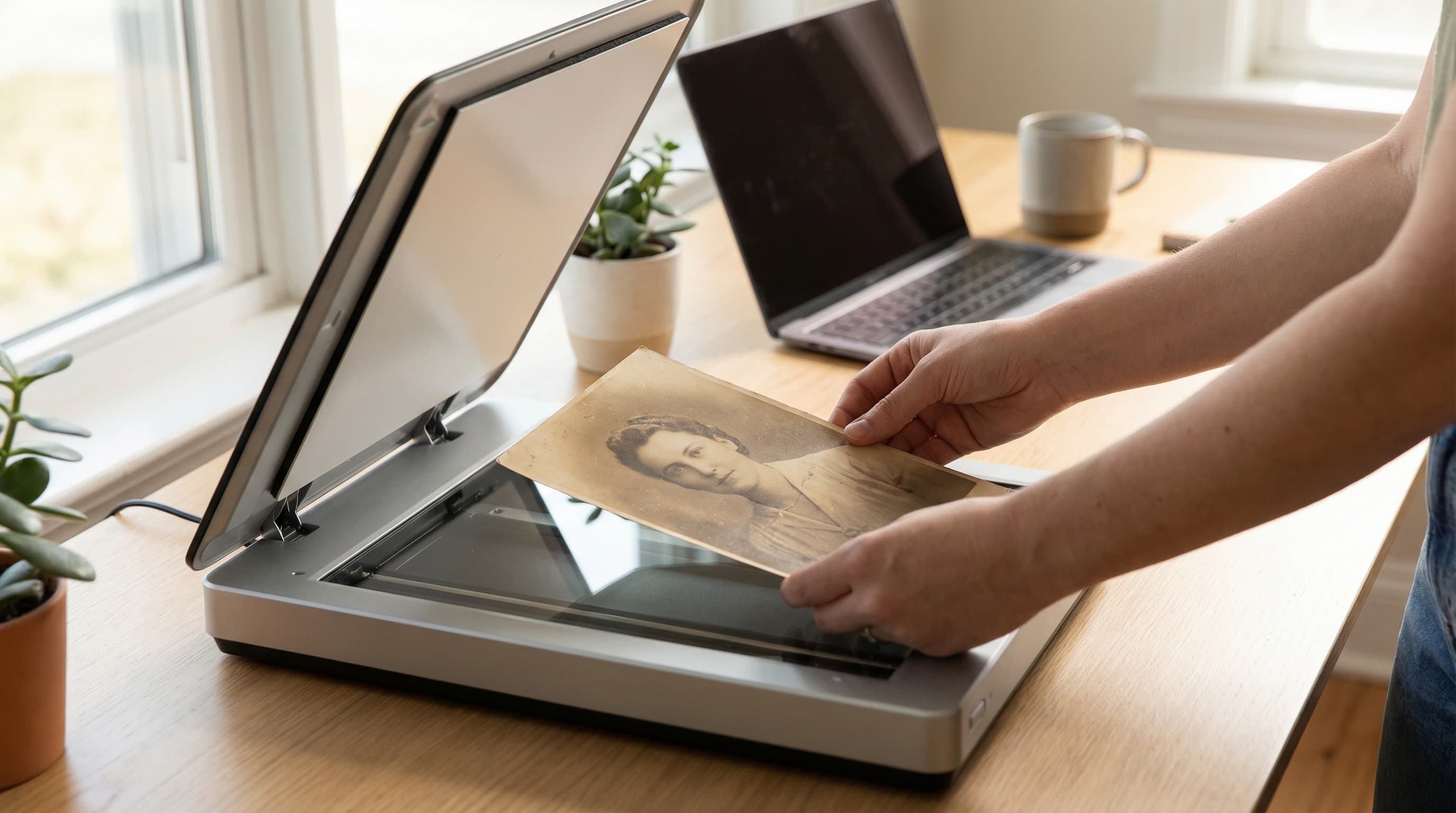
- High-resolution scanning: The original photograph is digitized at 600 DPI or higher to capture every surviving detail.
- Assessment and planning: The restoration artist examines the scan, identifies all damage, and develops a strategy for the work.
- Structural repair: Tears, cracks, creases, and missing sections are addressed first. This is the foundational work that rebuilds the image's physical integrity.
- Color and tone correction: Fading, discoloration, yellowing, and color shifts are corrected to restore the image's original palette and contrast.
- Detail refinement: Scratches, stains, spots, and minor imperfections are cleaned up. Sharpness and clarity are enhanced where appropriate.
- Quality review: The restored image is reviewed at full resolution to ensure that all repairs blend naturally and that the overall result looks authentic, not over-processed.
At RestoredPast, we offer three tiers of service — Quick Refresh, Full Restoration, and Heirloom — to match the level of work to the condition of your photo. You can see the details on our pricing page.
Frequently Asked Questions
Can you restore a photo that has been torn in half?
Yes. If both halves exist, they can be digitally rejoined with an invisible seam. If one half is missing, a skilled artist can reconstruct the lost portion using contextual clues, though the result for complex subjects like faces will be an informed reconstruction.
Can black-and-white photos be colorized?
Yes. Colorization is a separate service from restoration, but the two are often combined. Accurate colorization requires research into the era, clothing styles, and known details about the subjects. Learn more about our photo colorization service.
How do I know if my photo is worth restoring?
If the photo has personal or historical significance to you, it is worth restoring. Even severely damaged images can yield surprisingly good results. The best way to find out is to upload a scan and receive an honest assessment of what can be achieved.
Is the original photo altered during restoration?
No. All restoration work is performed on a digital copy of your photograph. The original print is never touched, altered, or harmed in any way.
What file format will I receive?
Most restoration services deliver a high-resolution JPEG and/or TIFF file suitable for printing at large sizes. At RestoredPast, you receive files ready for printing up to poster size.
See What's Possible with Your Photos
The best way to understand what restoration can do for your specific photographs is to try it. Whether your image is lightly faded or severely damaged, our team can assess it and deliver professional results. Satisfaction guaranteed.